I was in a discussion in a writing group today where an author asked if they could do certain things in their book that may be a little too ambitious for most. From what I gathered, they were a new writer, probably just beginning their journey. People chimed in with advice, but one response didn’t seem helpful. It was a phrase tossed around any time someone asks a serious question about the craft of writing.
“There are no rules to writing.”
I always find that phrase to be a limiting. The moment I actually started to grow in my journey of artistic expression was when I stopped believing that and started learning about the basic rules and structure of writing. It’s a phrase that, in my opinion, has become a crutch. I’ve heard it used across all creative mediums from writing, art, photography, music.
Has the idea that art has no rules become a easy way out to not learn and grow in our craft? I think so.
There are absolutely rules in every art form to build a foundation for you to start. These aren’t restrictions meant to stifle you. They are tools that help you communicate more clearly and effectively with your reader.
Here are just a few of the basic rules we encounter in different creative fields:
- Writing: Grammar, sentence structure, punctuation, narrative arc, character development.
- Art: Color theory, perspective, composition, proportion.
- Photography: Lighting, framing, exposure, focus.
- Music: Melody, rhythm, harmony, timing, key signatures.
Nobody is born knowing how to do these things. We all start with the basics that are time-tested. These rules helped generations of creatives tell stories and express themselves more power ways.
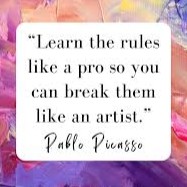
Even from a young age, structure and rules of creative expressions have built into how we learn. In school, we’re taught to write full sentences. We color inside the lines before we experiment outside them in art class. We memorize the lyrics to songs before we start adding instruments. All this develops our eye for the arts and a greater understanding that later create something outstanding. It’s only when we learn the rules that we can begin to bend or break them with purpose.
Yes, art is personal. Yes, creativity is about expression. Yes, you can break molds and defy convention.
Why can this phrase be harmful to new writers?
At first glance, telling a new writer “there are no rules” feels freeing. It removes pressure and makes people feel like they can explore outside the box. If that’s the only mindset a new writer clings to, it can actually do more harm than good. That mindset often makes people resist feedback because it’s just their style. They don’t take an effort to study the craft because they think everything is subjective.
Sadly, when we think there are no rules, we don’t understand why readers are confused or disconnected. Often a new author will see criticism is an attack rather than using the basic writing rules as a guild to help the story come to life. I’ve seen the potential of amazing artist lose their voice because they were too focused on defending their artistic freedom instead of developing their skill. After a while of getting negative feedback, they give up, and another lost talent goes down the drain.
Let’s be clear. The rules of writing are not meant to put you in a cage or stifle your creative instincts. The more in your toolbox, and the better you understand the options you have to break the rules.
At some point in every creative journey, you reach a crossroads. You can either keep telling yourself that there are no rules and stay in your comfort zone, or you can take responsibility for your craft and push yourself to improve.
 Loretta Kendall